Literary vs. Commercial

Last weekend I participated in the Writer’s Digest Conference Pitch Slam. After the event, an agent-friend and I discussed the pitches that got us excited, and there was one in particular that became the subject of a debate. I talked about a pitch for a magical realism novel that I couldn’t wait to read; she said the same about an urban fantasy. It took us all of ten seconds to realize we were talking about the same novel.

During the pitch, the author didn’t label his work with either genre, so we were left to fight over it. In her more commercially inclined hands, she would find an urban fantasy angle and exploit it to publishers. My tastes run more literary, so my mind ran with ideas of magical realism comparison titles and where I’d place it. (Keep in mind, neither one of us has read this manuscript yet, but this is what an agent needs to think about when hearing a 3-minute pitch.)

When I receive queries that claim to be literary fiction, it often turns out, after reading the synopsis, that they are very, very commercial. The flip side has happened too. I’ll request a supernatural thriller or dark mystery, with the intention of hopefully selling them to those specific markets, and the books turn out to be much more literary than the author probably realized.

I don’t think writers should get too hung up on labels, but it’s important to know the market in which you’re writing. You’re expected to give an agent an immediate sense of where they can sell your book, but even more than that you should be able to know who you’ll be next to on a bookshelf so that you can read your comparison titles accordingly.

Figuring out thriller vs. mystery vs. suspense vs. urban fantasy vs. supernatural vs. horror can be difficult, I know. In these cases, it’s best to just choose the closest and let a professional decide the best way they can sell it. But the line between literary and commercial isn’t as vague. You shouldn’t claim your book is literary fiction if it isn’t. For one, it’s rare you’ll find an agent who looks for literary fiction and commercial fiction with the same fervor, if they take on both at all. You don’t want to get a rejection based on a mislabel. Secondly, literary fiction can be quite different from commercial fiction, and not learning the difference can reflect a lack of research on your part.

The common argument, however, is that all books are technically literary. Right? Well, yes and no. Saying all books are literary is like saying all Young Adult novels are about characters under 25. Young is young, right!? Except, no. YA is for teens. Young is not just “young.” Like literary vs. commercial fiction, the genre labels can be misleading, which is why it’s important to know what they mean.

If you’re unsure about which you’ve written, here’s a quick definition of each:

Literary fiction: The focus is on character arc, themes (often existential), and the use of language. I like to compare literary fiction authors to runway designers. The general public isn’t mean to wear the clothes models display on the runway. They exist to impress the other designers and show the fashion industry what they can do. Literary writing is a lot like that, but on a more accessible level. Many dismiss literary fiction as “too artsy” and “books without a plot,” but this isn’t true. At least not most of the time. The plot is there; it’s just incidental. Literary fiction is meant to make the reader reflect, and the author will almost always prefer a clever turn of phrase over plot development.

Commercial fiction: If you write genre fiction, you are likely writing commercial fiction. There is also “literary genre” fiction, such as people like David Mitchell, Aimee Bender, Margaret Atwood, Gillian Flynn, etc. Meaning their use of language is equal to their attention to genre conventions. For the purpose of this blog post, let’s pretend that when I say “genre” in place of “commercial,” I’m talking about the ones that aren’t literary or “crossover” hits. I’m referring more to the ones that only fans of that genre know to look for, and usually come in a nice convenient mass market-sized package. [There is also “upmarket” commercial fiction, which I’ll get to later.] Unlike literary fiction, genre fiction is written with a wide audience in mind (aka “commercial”) and always focuses on plot. There is still character development in genre fiction, but it is not as necessary. Characters get idiosyncratic quirks, clever dialogue, and often learn something new about life or themselves by the end. The difference is that their traits are only skin deep. The reader stays with them in the present. Rarely do we see a character’s past unless there is something pertinent to the plot back there. Genre fiction has a Point A and a Point B, and very little stands in the way of telling that story.

An agent or editor will rarely prefer you play with these formats, especially if you’re a debut author trying to find (and build) your audience. If you’re writing a plot-driven genre novel that adheres to a sci-fi, romance, or thriller structure, don’t try to load it with literary devices and huge character back-stories that aren’t relevant to the plot. It won’t impress an agent if you have a super literary genre novel. It will more likely confuse us and make your book harder to sell.

“Upmarket” fiction is where things get tricky. Readers don’t know that word and don’t care, and there’s never a reason to pitch your book as “upmarket” if it doesn’t fall within a specific genre, but if you ever hear an industry person asking for “upmarket,” we mean the type of books that straddle a literary/commercial line. Books like The Help, Water for Elephants, Eat, Pray, Love, and authors like Nick Hornby, Ann Patchet, and Tom Perrotta are considered “upmarket.” Their concepts and uses of language appeal to a wider audience, but they have a slightly more sophisticated style than traditional genre fiction, and touch on themes and emotions that go deeper than the plot. Contemporary/realistic (a.k.a. “genre-less” fiction), “women’s fiction,” or other books your book club suggests are most likely “upmarket.”

With debut authors, I think the main source of uncertainty tends to come from what they set out to write vs. what they actually write. Genre fiction is written with a clear purpose. The author has an idea and writes a story to accomplish their goal. Literary fiction can be more accidental. A writer may start with an idea, and then discover along the way that they don’t want to write about that anymore. They’ve fallen for their character’s personal tale or the images they want to evoke within the reader. If the writing ends up falling somewhere in the middle, then it might be considered “upmarket.” Or, it could mean it needs more focus one way or the other.

What’s important to remember is that none of these types of fiction is better than the other. It’s all about personal preference, based on what you like to read and how you write. If an agent doesn’t represent a certain genre, it doesn’t mean he or she think it’s bad. It just means you’re better off with someone else. Be aware that a genre label can influence an agent, but be honest about what your genre is. It wastes everyone’s time – most importantly, yours – if you try to guess what you think agents want. We want books we can fall in love with that fall under in genres and styles we represent, whether they’re young adult, adult genre fiction, or literary to a Proustian degree. That’s all.

New Title Trend

Happy 2012, everyone! (It’s not past the point where I can still say that, right?)

I’m beginning my 2012 posts the same way most writers begin their novels – with titles.

Titles matter. Sometimes a bad title can ruin a good thing (Cougartown, anyone? But more on that later.). I’ve been having a problem with titles lately. Specifically, titles of television shows. It’s not so much what they are as what they reflect on society. I’m not liking what I see. Usually when I talk about TV on the blog, it’s about something that translates to novel writing, and the title trend I’ve been seeing in the latest crop of sitcoms is no different.

I’ve spoken before about “strong female characters” and what term means to me. Surprisingly, I think TV has been getting “strong” right more often than many novels lately. There was a lull in the past decade (I blame producers who tried to find “the next Sex and the City” by missing the point of the show.) Things are far from perfect, but in recent years we’ve been reassured that characters like Mary Richards (and Rhoda!), Murphy Brown, and Roseanne actually mattered. Women have come a long way. We get to be in charge of our sexuality, choose our own destinies, and have dragon tattoos (but more on that later). We get characters like Alicia from The Good Wife, Leslie from Parks & Recreation, and Caroline from The Vampire Diaries.

So if I’m so happy with the way women are finally starting to be portrayed, what’s my problem? Men are my problem.

Don’t mistake my italics for an emphasis on “men.” I like men, as most feminists do. My problem with Men are the titles the word keeps appearing in. It’s talked about less, but men suffer from sexism on TV, in movies, and in books too. The difference is that most of the better characters are written for men, so the good often outweighs the bad, and the sexism isn’t always as noticeable. But apparently someone over at ABC noticed and wants something to be done about it. Only instead of creating better characters for women, they’re leveling the playing field by creating worse characters for men.

ABC seems to be leading the Man Revolution, beginning with its already-canceled Man Up and Tim Allen’s return to TV, Last Man Standing. Both shows are about men taking their gender back. From whom, you ask? Apparently women, liberals, and gay/intellectual/vegan/hipsters who are not considered “real men.”  

Man Up is about friends who need to grow up, but can’t seem to shake their college lifestyle. It’s a typical boys will be boys character trope that we’re used to seeing in small doses, usually through a supporting character in an ensemble cast. Not to be outdone, CBS had the good sense to kill its new show How to be a Gentleman before it spread, yet is holding on tight to the wizened patriarch of all Men shows, Two and a Half Men. Like Man Up, both of these shows feature men in their 30s and 40s behaving like boys. It’s all fast cars, hot babes, no ambition, and zero self-reflection. On the other side of the “man” spectrum is Last Man Standing, in which Tim Allen has sacrificed his manhood by living in the same house as his wife and daughters, and now needs to return to his manly, undomesticated roots.

ABC’s crowning achievement this year might be their mid-season replacement, Work It, a remake of Bosom Buddies, which should tell you all you need to know. But to elaborate, this is a 2012 sitcom with a premise that was tacky and outdated even in 1980. Two men – extra macho-looking for comedic effect – decide the only way they can get jobs is by dressing up as women. Hilarity, weak premises, and sexism ensue. From the previews, the men look as convincing as women as the Wayans Brothers looked in White Girls. Not only do they neglect shaving and general upkeep even though they are passing as women, but they only wear shoulder-padded pantsuits that I can only assume ABC still had laying around from Bosom Buddies. It’s offensive to men as much as it is women. There is no equivalent to these men in real life, and the level of immaturity and stupidity they celebrate is insulting.

But I digress. Back to Men.

I described these shows in case you hadn’t heard of them, but what it boils down to is that every man featured on these shows wishes for simpler times (for men) when gender roles were defined and all men were created equal, with the same interests, thoughts, education level, and goals. While each show features men in arrested development, they still get to proudly wave their Man title high. And yet, every magazine cover, news article, and end-of-year round-up has been about women (“finally”) being recognized as equals in comedy.

We got to see Bridesmaids… and, um… If you’re waiting for me to name another well-received all-female comedy made in the past year (or ten), then you’ll have to wait until Bridesmaids 2 comes out. Our “Year in Comedy” consisted of one movie, and two new sitcoms, New Girl and 2 Broke Girls.

Notice the immediate shift in title choices. The irony, of course, is that while Men get to celebrate their lack of growth, the Girl shows feature young women trying to make it on their own as adults. Admittedly, New Woman doesn’t have the same cache, but even teen heroines Buffy, Clarissa, Veronica, and Alex Mack got to at least have their names in their titles. (Oh, this year we also got Whitney, which did for female empowerment what its ad campaign did to get me to watch the show.)

Once women are old enough to be taken seriously in the real world, television and media find new ways to infantilize them. Isn’t it so darn cute how those Girls are single and independent and trying to live in a man’s world? Someday they’ll make 3/4 of what those Men do. Then maybe when they outgrow their youthful optimism they can move to Cougartown or become a Good Wife or if they really snap under the pressure, remain a Girl, but ones covered with dragon tattoos. I suppose it’s too much to think they’ll ever be called Women though, right?

Since two of these Man shows have been canceled already, I have some hope that this trend won’t last. I hope that writers will stop thinking that the type of humor that worked 30 years ago is still relevant today, and that the most critically acclaimed shows on TV right now are the ones that challenge gender stereotypes and create non-archetypal characters. And mostly I hope that you, the novel writers, won’t let this trend infect your work.

(Parting exercise: Type in “wife” into the Amazon search bar under Books. Scroll through the bestsellers and acclaimed novels that tell stories of women overshadowed by powerful men. Then type in “husband.”)

2011: A Year in Queries

Hi everyone. Hope you all enjoyed the holidays! I’m squeezing in one more post in 2011. This year was my first *full* year of being an agent, so I thought the best way to commemorate this was with data collecting and spreadsheets. At the beginning of the year, I decided to choose three months at random and do a tally of every query I received. I’ll spare you from the VERY SCIENTIFIC (not really) charts and day-to-day totals, and just give a brief overview.

(Note: These results are from emailed queries only. Thankfully, I don’t receive many snail mail queries, and hope this stays true in 2012.)

In January 2011, I received a total of 442 queries. This is probably the most number of queries I received within a single month all year. January is a big query month. You have everyone who made it their New Year’s resolution to get an agent, you have the NaNoWriMo writers who took December to revise, and you have your usual queriers who just felt like querying.

Contrary to popular belief, January queries are not automatically bad, rushed, or even unwanted. I ended up requesting two manuscripts sent on the same day that month, and that day was January 1. Despite the optimistic start to the year, of those 442 queries, I requested a total of 8 manuscripts. Which means 434 people received a form rejection.

The next month I tallied was July. This is a slow month for obvious reasons. It’s the middle of summer. Writers are busy writing what they’re going to query, or they are vacation. Also, many agencies close to queries beginning in July, so it’s probably easier for writers to just resume duties in the fall. In July, I received a total of 388 queries, again including a post-holiday day of requesting two manuscripts in one day’s batch. Of the 388, I requested 11 manuscripts and sent 377 form rejections.

Finally, November – the last complete month of the year, work-wise. I received a total of 363 queries, the lowest total, but requested 12 manuscripts. November was also the month in which I received the highest number of queries in one day: 34. The lowest number I’ve received in one day’s batch was 7 (occurring once each month).

Random observation: Tuesdays and Wednesday are the biggest query days, while Saturday and Sunday are the slowest.

Using these samples, I’d say I average about 400 queries a month (4,800 per year) and request about 10 manuscripts per month just from the slush pile. This figure does not include any revisions I had asked for from previous months, contest winners, or requests from conferences. In case you’re wondering whether the requests were fulls vs. partials, I honestly didn’t keep track. But! I’d say 8 times out of 10 I request the full. It saves time in the long run and I can always stop reading if it comes apart. I request partials sometimes – most often if I’m on the fence about a particular premise (but was intrigued by writing), or if I love a premise (but not sure how the writing will be). Full disclosure: I may go back to requesting mostly partials due to an out-of-control reading pile that accrued around November.

To give you a picture of how many requests result in an offer of representation, out of the 100+ manuscripts I requested in 2011, I took on a total of 4 new clients, only 3 of whom came from unsolicited queries. (Admittedly I had offered on two others but lost them in a battle.) I officially started building my list in April 2010, and eager as I was to find clients, I took on a total of 8 out of a similar – though slightly lower – number of queries and requests.

For those who may not know, my *other* full time job at Curtis Brown is working in the foreign rights department. I love working in this department, but sometimes this means I end up passing on projects I really really like – but don’t love – just because I know my time is divided right now. I wouldn’t be able to give that person adequate attention. So, I keep my roster of authors purposely small so that I’m able to give proper time and care to my clients equally. By the end of 2012 I hope to raise my number of clients to an even 20. I won’t make it an official goal; I just think it’ll be nice. Obviously I’ll have to receive worthwhile submissions. Hint, hint… 🙂

While I chose these months at random (beginning, middle, end), the interesting thing I noticed in 2011 queries was that as the number of queries received decreased, the number of requested manuscripts increased. I take this to mean that more writers are doing research before they send. Rather than submitting blindly, more people are taking the time to realize I might not be for them. Meanwhile, those who do query me know exactly what I’m looking for or know why I’d be interested in their story. I hope this, too, remains true for 2012. Though, as you noticed, my reading pile got bigger and bigger at the end of the year. But, I’d rather take the time to read 20 amazing manuscripts than take a few hours sorting through a folder of lackluster premises, genres I don’t represent, or (worse) vampires.

So that was 2011 in a nutshell. As I begin Year #2 of being an agent, and I add more clients and book deals to my belt o’ publishing, I can only hope that one day I’ll look back and say “remember when I only received 100 queries a week?” Until then, thanks readers & writers for making my first full year as an agent pretty darn great.

See you in 2012, friends! Happy New Year!

The Recycle Bin

Today’s post is inspired by my mother, who (unbeknownst to her) raised an interesting question about ebooks. My mother only recently got rid of AOL but has somehow managed to jump immediately to having an iPhone, where – to her delight – she can download ebooks. Just one problem – “What do I do with them after I read them?”

I take after my dad. He doesn’t join Netflix for the same reason I don’t belong to a library – we need to own, and display, the things we love. With him, it’s movies. With me, it’s books. I have lots of them, and give or take the sporadic “do I really need three copies of Pride and Prejudice?” I keep 98% of what I buy or what’s given to me.

I like arranging books on my shelf, being able to look at them, picking up old favorites to re-read, or just  reorganizing my shelves when I’m bored. But mostly I like owning books. For these reasons, I don’t really buy ebooks. I say “really” because I’ve purchased five ebooks in my life, but I don’t see myself buying more if they are also available in print. I have nothing against them and see no difference between reading a book and reading an ebook during the act of reading. My love lies in the books themselves. There are books I have in my apartment right now that I know I won’t read again, but I like knowing they’re there.

But there are those with a less romanticized notion of books. So you tell me, embracers of ebooks, what do you do? If no one can see the physical evidence that you’ve read Thomas Pynchon, do you bother keeping him on your ereader? Can you delete and move on, the way technology does, or do you transfer each ebook to every new ereader because you just can’t let go?

Stop Helping Yourself

We all know querying is hard. Personally, I think writers make it harder on themselves, though I understand that keeping everyone’s individual guidelines straight can make any person insecure. If you’ve reached the querying stage of writing, you’ve probably read that agents get anywhere from 50 to 300 queries per day. While I can’t speak for every agent, I personally respond to all them, even if it’s ultimately a form rejection. This takes a lot of time (it’s also why many agents have a “no response means no” policy that’s been quite controversial recently.) Knowing all of this, writers think they need to go out of their way to stand out among the pack even though it really can’t be said enough that the only thing that will do that is to have an amazing book.

Writers with the best of intentions will include buzz words in their queries that they believe make them look more professional, and, in their minds, will attract an agent’s attention. What they don’t realize is that for many agents, these phrases and pieces of information more often serve as red flags that this writer has no idea what they are talking about or how publishing works.

Here are the Top 3 self-praises I see:

“I am a published author.”
If you have prior publications, you should absolutely list them in your query. Give the title, date, and publisher. Without that information, we have no way to believe you or take this claim seriously. Saying you are a published author when you’ve self-published or, worse, haven’t published at all makes you look foolish.

If you self-published, own it. Tell us when, with who, and for what type of book – then provide sales figures.  If you can’t give us this information, don’t feel that you have to. If your self-pubbed book only sold around 100 copies, it’s not the end of the world. Query agents with a project other than the one you self-pubbed and don’t feel as if you need to even mention that other book until you receive an offer of representation.

There is absolutely nothing wrong with being a debut author with no prior publishing credits. Being unknown or new to writing will never count against you if you have an amazing book, but having a fake or, let’s say, questionable publishing history can end up hurting you if you aren’t honest.

“My manuscript has been professionally edited.”
The first question that always comes to mind is “by whom?” Your friend who works at the local newspaper? A college writing professor? Your aunt who reads a lot? There are plenty of freelance editors out there whose opinions are professional and whose judgment I would respect as an agent. However, even if you used professional services, there is no reason to say that in your query. It tells me nothing about the quality of your writing or whether I’d be interested in your book. “Professionally edited” is a vague term at best, but at worst it can means one of three things:

1) You think the manuscript is already perfect and you won’t be willing to revise.
2) You could be willing to revise, but you aren’t able to do it yourself.
3) You think copyediting and editing are the same thing. (This last one I see a lot – the “professional eye” who looked over your manuscript made sure it was polished and grammatically correct, but the character development, plot structure, and overall quality of the writing were still severely lacking.)

Every writer needs an editor, but editors can’t make mediocre writing great or make an agent fall in love with a premise. All of that needs to come from you.

“My book has already gotten interest from Hollywood.”
On paper, this sounds impressive and I can see why writers include it in their queries. But let’s break this down. For one, how does anyone in Hollywood know your book exists? If you’re sending manuscripts blindly to showbiz people, not only could your idea could get stolen (and you wouldn’t be protected), but it tells me you might be signing contracts and giving away rights that renders any interest I might have had useless (not to mention any deal our film department could have made for you).

The second red flag is that “Hollywood interest” is not impressive to me unless you have an actual contract in your hands from an established production company. There is a huge difference between “Paramount Pictures wants to buy the film rights to my manuscript” and “Larry the coke dealer on Hollywood & Vine said he’ll give me $50 for it.” Both of these can mean “Hollywood interest,” and without knowing the specifics, I assume it’s the latter. Plus, think of how many promises are broken in the film industry. Some slick suit who calls you “baby” can tell you he loves your book one minute and then throw it in the trash as soon as you look away.

***

There is nothing wrong with wanting to make yourself sound more impressive than you think you are. Being a writer is impressive enough in itself, but I understand that in queries you want to add a little more. It’s called selling yourself, and this business is all about selling a product. Specifically, your product. But if you really want to impress an agent and get noticed, all you need to do is write the best book you can and know which agent will want to read it.

You should have pride in your work – if you don’t, who will? Saying you’re “award-winning” even if it was from your local library in 1998 might not change an agent’s mind about a project, but hell, you earned it and you should say so. Just make sure you’re not inflating yourself so much that you pop.

Happy NaNoWriMo Day!

It’s Opening Day of National Novel Writing Month (NaNoWriMo) and it’s a day that usually fills agents with dread. The goal of NaNoWriMo is to write an entire novel in a month. It’s basically a month-long cram session, only there is no final exam. The reason agents get antsy about it is because once November is over, December queries pile up with hastily written novels from hundreds of eager writers. And right in the middle of the holiday season when we’re all trying to clean out our inboxes, no less!

Personally, I think NaNoWriMo is great. It’s completely unnecessary and necessary at the same time. In my head, it’s no different than holidays like Valentine’s Day or Thanksgiving. Sure, we should always show the person we love that we appreciate them and yes, we should always be thankful for what we have. And how many of us have used “but it’s my birthday!” to have an excuse to do something out of character or take an expensive trip or just get all of your friends in one place when life interrupts other plans?

Just like writers should always be working on their next novel, sometimes we need something like NaNoWriMo to get us to just sit down and write. It’s easy to take time for granted (it is infinite, after all), so creating days to specifically set aside for what we should be doing year-round is a good way to make sure nothing else can get in the way.

To have a successful NaNoWriMo, remember these things:

1) Take it seriously. This is your excuse to finally finish that novel you’ve been “meaning to get to.” Don’t waste it. Set a word count goal for each day, and don’t go to sleep until you reach that goal.
2) Don’t expect what you write to be brilliant. See above. As long as you reach your goal, then you’re golden. Don’t worry about plot holes, character continuity, or whether the prose is even pleasing to read. Just write.
3) Push yourself to go further. One of the goals of NaNoWriMo is to have a “50,000 word novel by the end of the month.” That is not a long novel. If you’re writing a YA or adult novel, you’ll need to add 10K-30K to that amount. Don’t do the bare minimum just to reach the goal of the project. Reach your own goal.
4) Be smart with revisions. You just ran a marathon. Rest before you start over again. Try not to even think about whatever it is you just wrote in November (you were probably blacked out half the time anyway). Sometime in the first two weeks of December, read it from start to finish and see which parts need revising. Try not to do more than simple copy-editing while reading it over. Then once you get a feel for the entire scope of the novel, take another month, or longer, to go into heavier revisions.
5) Have a life. Eat, sleep, go out, play with your kids, be a normal functioning human. As we already established, the Great American Novel will not be ready by December 1st. NaNoWriMo is just your way of getting it all down on paper. So enjoy your life and don’t let it consume you.

And finally, Be Smart About Querying. This is a race to get your novel written, not a race to get it published. Treat it the way you would anything else you’ve written. Research which agents would like your genre, what their guidelines are, and which agents are open to submission (remember holidays seasons and even early January are typical “closed to queries” months for many agents).

Are any of my readers participating in NaNoWriMo this month? What are your plans for reaching your goals?

Happy writing, everyone!

Putting the A in YA

Last week I had an interesting conversation about “New Adult” with the author of this article, “Where Are All The Young “Adults?” She lamented – with good reason – that there is nothing for her to read that’s written specifically for her, at age 22. The closest a genre has come to successfully targeting those in their early twenties is the sub-genre Chick Lit in the late ’90s/early ’00s. Twentysomething males or women looking for something in a different genre were out of luck. I understand why the 18-25 crowd is frustrated with their lack of options, and their confusion over why Young Adult doesn’t include them.

YA is a sub-genre of fiction written specifically for (and starring) high school aged teens. If they are out of high school, the book is not a YA. (Note: There is some leeway with freshmen in college and 18-year-old protagonists, but those are on a case-by-case basis, and truthfully, if you want the book to be marketed as YA, you better have a darn good reason for making them that old.)

I wish YA was called something else (Teen Lit, perhaps?). For one, the name implies that the intended audience are adults. They’re not. Teens are what happen before adulthood and after childhood. I mentioned before that the term “teenager” didn’t come into the mainstream lexicon until the 1950s, and it took almost 40 years for YA – as a genre name – to have its own section in a bookstore. That’s a long time to wait for recognition, and as we all know too well, YA – even in its Renaissance Period of today – barely gets the respect it deserves.

Bringing me to “New Adult,” a sub-genre of fiction trying semi-hard to exist in the post-YA, pre-adult marketplace for those between the ages of 18 and 25. I am all for this. The college experience, figuring out grad school, jobs, not living off your parents, etc. are hard to deal with and they are certainly not “adult” concerns.  They deserve their own literature. So why hasn’t it caught on yet?

To me, there are two reasons why New Adult isn’t a marketable genre, and why it probably won’t be for at least another ten years. 

Theory #1: Before “teenager” came into the lexicon, there wasn’t a need to think of them as something different. Pop culture hadn’t given them a voice yet. They didn’t have rock ‘n roll or heartthrobs or beach movies being marketed directly to them. The concept of marketing to teens separately from adults and children was something that lasted well through the ’80s. But then, the ’90s happened and the “twentysomething” was born. (OK, well technically they were born in the ’70s, but you know what I mean.)

Teens were still being directly marketed to, but now another group of people had their own language and pop culture – Gen X. They read books by Bret Easton Ellis (found in the adult section) and watched movies like Slackers and Dazed and Confused. “Grown-ups” didn’t understand them, and teenagers only looked admiringly at them from afar (like I did).

This idea of an extended adolescence wasn’t something that previous generations had the privilege of experiencing. Gen X was the first generation to come out of the Baby Boomers. Many of them were the first of their families to go to college, have a choice other than marriage or military, and live without mortgages and jobs and car payments just a little bit longer. 

When you think of how long it took for YA to become a genre after teenagers were finally given a name, New Adult even being discussed as a possibility feels like progress. Even a “Big 6” publisher has started looking for titles under that heading. Knowing this, I don’t think New Adult will take quite as long as YA to get recognized by the masses. The fact remains, however, that it’s not a sub-genre that exists yet.

When I get queries for New Adult, I’m torn. I can either request it, knowing I’m only going to tell the writer to make it older or younger. Or, I end up rejecting it if I know the story can’t be older or younger. As much as I think New Adult should be a genre, I know there’s nothing I can do about it all by myself. Writers can’t write for a marketplace that doesn’t exist, and agents can’t sell to a publisher if the publishers can’t sell it to a bookstore. So, for now, that 20-year-old protagonist who’s still in college who you think teens should read about is going to get placed in the general adult fiction section of most major bookstores.

Theory #2: Like I said, New Adult will happen eventually, but the fact remains that it will need to sell in order to prove itself. And, well, I’m skeptical. I think New Adult is great in theory, but as someone who’s no longer in that 18-25 age range, I speak for only for myself when I say it’s unlikely I’d look in the New Adult section of a bookstore to find something to read. While I make exceptions to any genre I’m not particularly drawn to, New Adult holds very little interest to me. So, why? After all, I read YA.

For one, maybe there’s just not enough distance between my current age and the New Adult age, so I’ve had less time to feel nostalgic for it. (And egad! Why on earth would anyone want to re-live being 22??) But I don’t read YA because I’m nostalgic for high school. I read YA because of the emotions it evokes, and knowing that the human experience at that age is pretty universal.

It’s true that not everyone goes to the same type of high school, or even goes to high school, but everyone goes through puberty. Everyone feels what it’s like to not understand any of your emotions or why they are suddenly happening all at once or why hugging your parents is much more embarrassing than it was the year before.

With New Adult, there is no universal experience. Within the genre, there are too many niche markets to consider, which makes it that much harder to place. Not everyone goes to college or makes the same choices when entering adulthood. Even within the group who goes to college, the experiences differ in ways that are much more polarizing than going to different high schools. No matter what kind of high school you went to, we were all forced to take the same general courses or participate in the same extracurricular activities. 

The Gen X definition of twentysomething created the template for the next generation, but it’s still considered a privilege to go to college, to live off your parents, to have an extension on avoiding adulthood. If you ask the person who opted to get married and have kids right after high school, or even right after college, their experience of being a New Adult will look a lot closer to what those who chose to wait consider Real Adult.

So, then, is New Adult really “College Lit?” That creates an even smaller market. There’s a reason “The College Years” of high school TV shows fail. There’s just not enough people who care. The original teen audience can’t relate, the adults out of college think of it as too young, and the actual target audience is too busy being in college, working, or starting families to watch TV or read for fun.

To current 18-25 year olds, I know this sucks for you. It’s not your fault you’re the 1st group of New Adults to exist after Gen X (unknowingly) gave you a name. And it’s not your fault no one thought of creating books for you, anticipating your arrival. Someone needs to be the pioneer, and unfortunately that someone is going to be you. Write stories about your experiences, as different and as wide-ranging as they may be. Give us something to listen to, and we’ll respond. We might just take a while. 

Interview with Michelle Davidson Argyle

<!–[if !mso]> st1\:*{behavior:url(#ieooui) } <![endif]–>

My week of non-traditional publishing alternatives (as I am now calling self & indie publishing from now on) is coming to a close. Michelle Davidson Argyle is a name you’ve heard on the blog before. She’s the artist behind my awesome Glass Cases banner, and designed the covers of Tracy Marchini’s self-published titles. Michelle is also a writer of contemporary and literary fiction, and fantasy. Having started with self-publishing, she moved on to indie with Rhemalda (which Karen Amanda Hooper told us all about yesterday!).

Tell me about Cinders. What made you decide to self-publish it?

I wrote Cinders at a time when I was really frustrated with publishing and writing. I had quit my blog at the time and decided I wanted to write something just for me with no restraints, no goals, really, except to entertain myself. Cinders started as a short story and then grew into a novella. Halfway through writing it I decided I would self-publish it because as a contributor of The Literary Lab blog, we had a lot of readers asking us about self-publishing – and we really didn’t know what to tell them. 

So in a lot of ways, I wrote Cinders to self-publish it. I knew it stood a very small chance of making it traditionally. Agents don’t often look at novellas, especially as a debut piece, and publishers don’t see them as huge money-makers, either, so self-publishing seemed like a natural decision for the book. I am a photographer and love to design things, so the cover was a shoe-in, as well. I had a lot to learn, but the path has been a great one. 

At the time I published Cinders, I never intended to self-publish other works (and I haven’t so far, although I do have plans for a short story collection).
Did you query agents before deciding to self-publish? If so, how many/for how long?
I queried exactly two agents before self-publishing, but that was two years before I self-published, and I wasn’t very serious about it. I queried an agent at the Andrea Brown Literary Agency and Nathan Bransford, both for my contemporary YA novel, The Breakaway, which is now coming out with Rhemalda Pubilshing in 2012. 

I’m embarrassed when I look back on those two queries. They were terribly done. I didn’t know what I was doing, and the book was far from ready. I knew that, too, and quickly changed my strategy to strengthening my writing. I knew it would be a few years before I was ready to publish.
What self-publishing service did you use?
I used CreateSpace.
Did you have to pay for their services?
My experience has been excellent with CreateSpace. Their quality is decent and their process is easy to use. CreateSpace is completely free unless you want to use their Pro Plan, which currently costs $39.00 up front and is $5.00 a year after that on each title. The Pro Plan gives you a larger royalty and brings the cost of your book way down. It was worth getting, at least for me. I think CreateSpace also offers services like editing and cover design and marketing for a fee. I didn’t use any of those services.
If I were to self-publish all my work exclusively, however, I would go with Lightning Source. They are a better fit for a long-term self-publishing career, and many small publishers (and even larger publishers for backlist titles, I’ve heard) use them.
Did you use outside editors for your work before self-publishing?
I contemplated hiring an editor for Cinders, but found out that one of my writing acquaintances online used to work as an editor. She volunteered to edit Cinders at no cost. She did an excellent job. I also put the book through extensive copyediting and several rounds of readers I’ve learned to trust and work well with over the years.
What did you do to publicize your book? How do you reach your target audience?
I gave away a lot of free books (print and ebook) as part of my blog tour, which lasted for one week when the book released. I’ve held contests, done interviews, and had a small launch party in my home. Reaching my target audience has been difficult, honestly. A lot of readers assume the book is young adult, but it’s more literary adult fantasy than anything else. For this reason the book has received some nasty reviews and misunderstanding because readers expected something completely different (namely a Disney fairy tale). I’m fine with that, but it’s made me think a lot about target audiences and book presentation.
Can you give a picture of how it sold? What percentage of royalties did you receive?
I receive 70% royalties on ebook Kindle copies sold through Amazon (in the U.S.) and a varying amount on print copies. CreateSpace charges a set fee on each sale depending on the page count, plus they take 40% of the list price. I currently have Cinders for sale at $6.99 for the print copy. This means I make $1.14 per sale on the U.S. site, but I have altered the price several times, so that amount has changed since I first released the book.
To date, I’ve sold 520 copies of Cinders in 14 months and made approximately $1,300. This includes all sales, including by-hand print book sales, ebook sales, and online print book sales through all channels. However, I’ve spent approximately $1,600 on the book (buying print copies, shipping free copies out, printing bookmarks, business cards, throwing a launch party, paying for the cover, the list goes on and on), so I haven’t actually made anything on the book yet.
To be completely honest, some days the amount of books I’ve sold seems high, some days extremely low. For my first book, however, and considering the true genre and that I’ve only barely released my second novel through a publisher, I’m happy with how it has sold so far.
Were there any unexpected challenges in self-publishing, things you didn’t expect would be so hard?
The emotional rollercoaster, mostly. The stigma against self-publishing (and yes, I believe there is currently still a stigma and there always will be a stigma to some degree) made it hard for me to feel on the same level in my own circle of author friends who were going with agents and getting huge deals and hitting bestseller lists and all that jazz. I felt very small and very different and it was hard for me to get used to the fact that I’d only sell a few copies of my book a week when other self-published and traditionally published authors were reporting about selling hundreds a week. What was wrong with my book? The cover was professional, the writing phenomenal, the reviews high, and I was pushing it at a steady pace. Still, I think when I realized how hard it is to self-publish a book, market a book, and keep writing books at the same time, I knew self-publishing wasn’t for me. I needed someone backing me up, rooting me on, and helping me market, even if just a little. It might be awful to say I need that validation from a publisher, too, but it’s true.
In all honesty, I’m not cut out to run my own business entirely by myself (I’m not sure many authors are). It was too much to do and too emotionally draining. Traditional publishing has been just as much work, but I have a wonderful publisher who acts as a safety net, a friend, and a financial supporter of my work. It makes all the difference to me.
What advice would you give writers who are considering self-publishing their work?
Understand that self-publishing your work is not an easier road than traditional publishing. It might seem easier, but in the long run, it isn’t if you’re expecting the same results as a traditionally published author. I believe it all evens out in the end. For the amount of work and time an author puts into starting their own self-publishing venture—if done professionally—just as much time and work could go into querying and selling a book to a bigger publisher.
I think too many writers are jumping onto the self-publishing wagon for the wrong reasons. They are either fed up with the traditional system and want to avoid all that waiting and frustration, or they think they’ll be an exception and hit it big like some of the self-publishing success stories out there. Those in the middle who do their research, take the time and money to do things professionally, and have realistic expectations, are the ones who will be happiest, I think. I’m just sad when I see someone self-publishing with any regret in their decision. It definitely needs to be something that is 100% yes!

You’ve since moved on to Rhemalda Publishing to publish Monarch. What made you decide to make the move to a traditional publisher?
Well, as I explained above, I never intended to keep self-publishing my work. If anything, I was going to self-publish two other novellas to go with Cinders, but I had no plans to self-publish anything after that, especially my longer works. I had Monarch waiting in the wings, close to querying, and when an author I had no connections to contacted me about reviewing Cinders and ended up loving the book, I looked into her traditional publisher (Rhemalda Publishing) and decided to submit Monarch to them.  Small publishers had been getting some good buzz at that time with Tinkers (a novella with a small press) winning the Pulitzer prize. I thought Monarch would be a good fit with a small publisher. I was right!
Did you consider trying to get an agent again to help guide you with signing a contract? If not, do you have a lawyer to handle them for you?
I did not consider getting an agent or a lawyer at that point in time, no.  The author I knew with Rhemalda Publishing had hired a lawyer to look at her contract, and since we had become friends by that time, she answered a lot of questions for me. My contract was very similar and I did not feel the need to spend money on a lawyer when Rhemalda was so open to answering any questions and negotiating certain items if I wanted. I’ve talked with several other Rhemalda authors since then who have hired lawyers to go over their contract for them and not one of them has had issues or any large concerns. I’ve signed two more contracts with Rhemalda now and I’m happy with all three.
Finally, tell us about Monarch. What other projects do you have lined up with Rhemalda?
Monarch is my adult thriller about a CIA spy who’s set up for murder and has only one place to go—an old flame named Lilian Love who owns the Monarch Inn. The book is told from three points of view and centers around shooting bullets, love, lies, and of course, butterflies! You’ll have to read it to find out how that all comes about.
As far as future projects, my contemporary young adult novel, The Breakaway, comes out fall 2012 from Rhemalda. It’s about a girl who’s kidnapped by a family of jewel thieves—and she’s not sure she wants to leave them, especially the one she’s falling in love with.
Then Bonded, my collection of fairy-tale themed novellas (including Cinders) will be released from Rhemalda spring of 2013. It includes a continuation (Cinders), a retelling (Thirds), and a prequel (Scales).
I’m very excited and very happy with my career and choices so far. It has been an exciting road! Thank you for inviting me to this interview, Sarah!
***
HUGE thanks to Michelle, and to all of the featured authors this week. Also, thanks to my readers. I hope you all learned a lot this week, and see that publishing is not black or white. 

I, for one, learned to let go of some of my prejudices against self-publishing. It’s not all angry rejectees and wannabe millionaires looking to “stick it to The Man.” There are real people with real talent who put in real effort to get their stories read, and isn’t that what we all do? There’s certainly room for self-publishing, indie publishing, and traditional publishing to live amongst each other. There’s no right way or wrong way; just the best way that works for you and your projects. 

No blog post on Monday, but we’ll be back to our regular Story Time schedule on Wednesday. Hope you all enjoy the long weekend!

Interview with Karen Amanda Hooper

There’s a bit of a hubbub about the terms “self-publishing” vs. “indie publishing.” Many self-pubbed writers refer to themselves as indie – implying they are independently publishing their work on their own. It’s “independent” in its truest definition. I understand where it comes from, but to me, the words can’t be interchangeable because the term “indie publishing” already exists. It refers to being published by an independent press, who is an established publisher but not a “Big 6” style corporate machine. 

Still, when you boil it all down I guess it’s just semantics. The term “indie” is changing, and since words develop new meanings all the time, I won’t argue with self-pubbed writers who call themselves indie. But! For the purposes of this blog (since it’s mine), indie will mean non-corporate and self-pub will mean self-pub. Thanks 🙂

Which brings me to Karen Amanda Hooper. Karen is not a self-published author, but rather an indie author in the old-school sense of the word. She doesn’t have an agent and while there are several independent publishers who won’t take unsolicited material, Karen found one who did. This week isn’t just about self-publishing, but about other viable options that go against tradition. I hope you all benefit from hearing her story, and learn about a third option you might not have considered before.

What do you write?
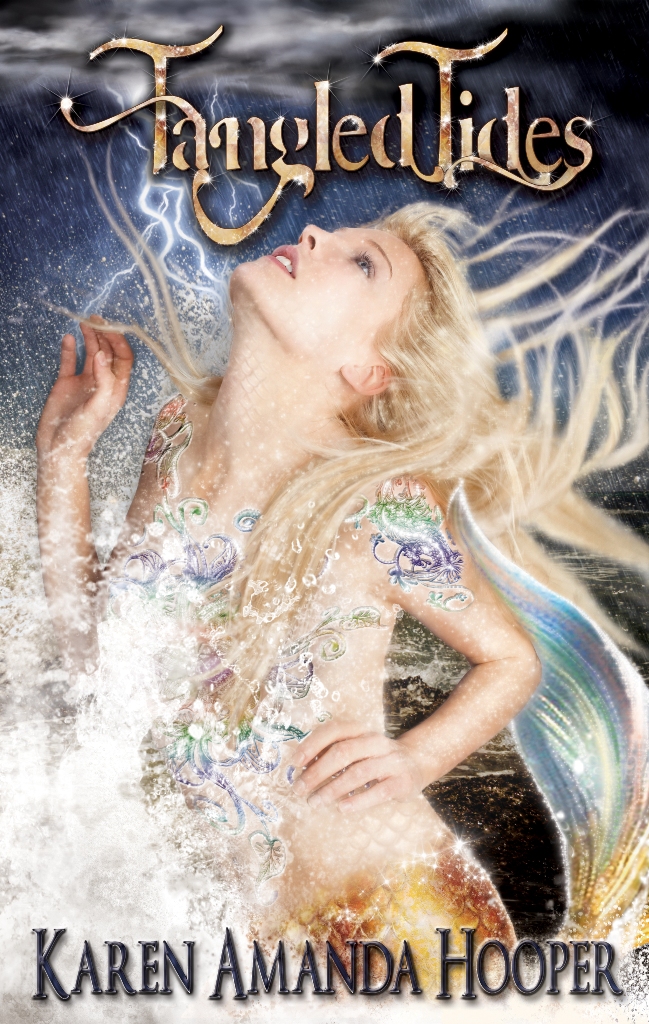
YA that blurs the line between fantasy and paranormal, and, of course, there’s always romance involved. My debut novel, Tangled Tides, is about an island girl turned into a mermaid against her will who discovers she’s the only soul who can save a world of merfolk, selkies, and sirens from becoming extinct—including herself and the sea monster she falls head over fins for.
Did you query agents before deciding to publish without one? If so, how many/for how long?
I did query agents before submitting to Rhemalda. I had to open my Agent Cupcakes folder (we call them cupcakes instead of rejections because they’re easier to stomach with a sweet name) and count the actual number. Here are my stats: 
Agents queried, 78 total. That was over a 10 month period in 2009. I received quite a few requests, a lot of form cupcakes, some nice personalized cupcakes, and a couple agents who requested the full but I never heard back from them (and yes, I did check in).

How did you hear about Rhemalda? What made you go with them?
Crazy story actually (sorry it’s so long). I shelved this manuscript in early 2010 after getting no offers of representation. By springtime I was querying a totally different project when a USA Today article came out saying how mermaids were the summer paranormal trend. A few writer friends sent me the link saying I should self-publish my mermaid story. I took it as a sign from the universe and figured why not? I never planned on querying it again so why not throw it out there while mermaids were popular. I contacted a couple friends who had self-published and asked for advice on how to educate myself on the process. One of those friends was Michelle Davidson Argyle. She had read some of my story and told me to submit it to her publisher. At the time I really thought I had no shot, but I submitted anyway. A few weeks later I got The Call. I was standing in NYC waiting for a cab outside of the RWA National Con (we were on our way to an agency cocktail party where a friend was about to sign with her agent). Rhemalda told me they loved my story and wanted to discuss some things with me to see if we were a good fit for each other. I wanted to scream with joy from the rooftops but I couldn’t steal my friend’s thunder. (She was literally minutes away from signing with her awesome agent!) So Rhemalda and I scheduled a phone call for the next day where we discussed lots of details, including a new title (thank goodness) and their vision and mine. I sat on the floor in a quietish hallway of Newark airport talking to Emmaline at Rhemalda for over an hour. They genuinely loved my story, they wanted to rush it to publication, and they made me feel like family. By the time we hung up I was so happy and excited that I called my mom in tears.
Do they have their own editors? If not, did you use any outside editors before submitting to them?
Yes, they have two fabulous editors, Kara Klotz and Diane Dalton. Diane is the editor for Tangled Tides.

What are they doing to promote your titles? 
Currently they have a Goodreads giveaway for U.S. readers and they’re hosting an International eBook giveaway as well. We’ve discussed promoting Tangled Tides through Goodreads and Facebook ads, possibly doing fun stuff like reading and signing at the Mermaid Convention in Las Vegas next summer, and hopefully signing at some writing conferences as well. And, of course, ARCs, a blog tour and exposure through Rhemalda’s website.

Do they have a formal contract? If so, did you have a lawyer review it before you signed?
They do have a contract and I did have a lawyer look it over. He had me question a couple points and Rhemalda patiently answered any and all of my questions and explained everything in detail until I was completely comfortable signing. They even added a special clause to accommodate my unique situation of signing one manuscript while another manuscript was still out with agents. Their contract is very author friendly.
Is Rhemalda also handling foreign, audio, merchandising, and film rights? Who has control of the subrights of your work?
Rhemalda handles the foreign and audio rights. I retained merchandising and film. If anyone approaches Rhemalda about subsidiary rights then we’ll negotiate a separate contract at that time.

Do you think you’ll still try to get an agent even after your experience with Rhemalda? Why or why not?
My honest answer: I don’t know. I always envisioned having an agent for my first deal and as a long-term teammate to guide and advise me throughout my career, but for now, the universe has led me down a different path. My experience with Rhemalda has been incredible so far. If all keeps going well then I’ll submit the sequel of Tangled Tides to them. However, a few agents and another publisher have a different manuscript of mine, so time will tell what will happen with that project. Rhemalda made it clear that they will be supportive of whichever route I end up taking.
What advice would you give writers who are considering finding a publisher without an agent?

It can be done. If I did it, anyone can. Oh, and expect the unexpected. It can come out of nowhere like a freight train and you’ve got to be ready to ride. 

For those of you who don’t know (and you might not because it was seeeeecret for a while), Karen is also part of a super cool YA blog team called YA Confidential, so do go check that out. 


Thanks again to Karen for sharing her publication story! Tomorrow we will end the week of interviews with Michelle Davidson Argyle, who has now been mentioned by two of our featured writers this week. (Not to mention she’s responsible to my awesome Glass Cases banner!) See you then.

Interview with Tracy Marchini

Self-Publishing Week continues with a visit from Tracy Marchini. As some of you may know, Tracy and I worked together at Curtis Brown, Ltd. when we were young and wide-eyed assistants. She was in the children’s department and then landed a real live literary agent of her own! Tracy’s roots (if you will) are in traditional publishing, and she took that knowledge with her when considering self-publishing. As you’ll see, she’s found a way to balance both and proves that there doesn’t need to be such a concrete divide between Traditional & Self.
How many agents did you query before landing one?
To be honest, I don’t really remember!  I’ve actually had two agents (though one was for a very brief point in time), so if you compile both searches, it was probably a bit over twenty or so.  My last agent and I parted ways when she was coming back from maternity leave and was consolidating her list.  I know a few authors who have terrible editor luck — every time they have a new book, their editor switches to a new house.  I am hoping that is not my destiny!  As someone who has worked at an agency, I certainly understand the value, and will probably start looking again in the near future.
 
What made you decide to self-publish as opposed to search for a new agent?
I had started working on Pub Speak: A Writer’s Dictionary of Publishing Terms before my agent and I parted, but the book targets such a niche audience, that I figured it’d have a hard time attracting the attention of an agent or larger publisher.

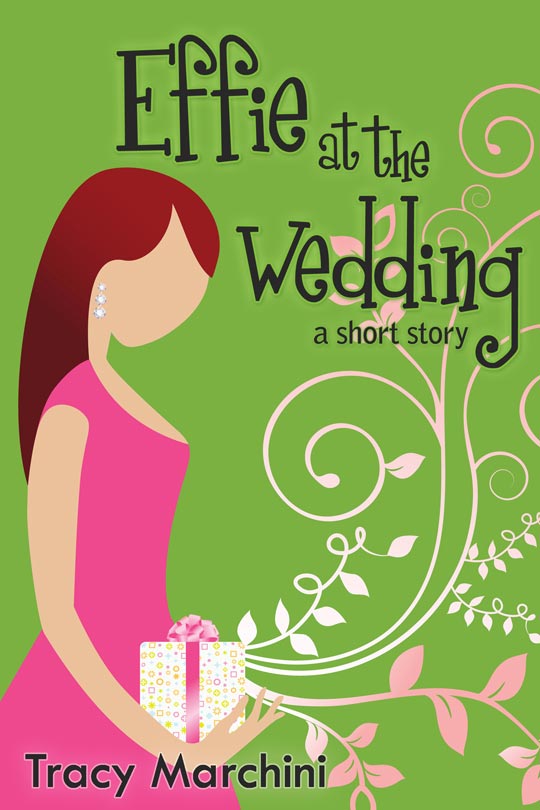
I’d also been interested in exploring some alternatives to the traditional process, so I thought that Pub Speak would be a great opportunity for me to get my hands dirty and pub it myself.  The next day, I published Effie At The Wedding, a contemporary YA short story that had been waiting for an appropriate market for a while.
 
What was the first book you self-pubbed and what service did you use?
Pub Speak was the first, and I published directly to Amazon (using Kindle Direct Publishing), Barnes and Noble (using PubIt!) and Smashwords.  Through Smashwords, the book has been distributed to iTunes, Kobo, Diesel, Sony and Scrollmotion.  The print edition is being handled through CreateSpace, which is the print-on-demand arm of Amazon.

I’ve also commissioned cover art.  The covers of Pub Speak, Hot Ticket and Effie At The Wedding were all designed by Michelle Davidson Argyle.
 
What was your experience like? Did you have to pay for their services?
The above services are all distributors and retailers, so as the publisher of the books, I pay nothing up front*, retain all my rights to the material and receive a percentage of each book sold.  

So far, my experience has been positive.  The reporting is significantly different from traditional publishing.  Where a traditionally published author receives royalty statements every six months for the period that ended one to two months prior, I can see how many books I’ve sold in (almost) real-time through KDP and PubIt!.  (This is both a blessing and a curse!)  Smashwords pays on a quarterly basis, and their partners are a bit more like a traditional publisher, in that they pay in periods, and then you get paid when Smashwords pays out based on their quarters.

There’s certainly more leeway to react to changes in the market.  If you write a new book and want to add a sample of it to your current best-seller, it’s easy to update the file without having to take it off the market.  It’s equally easy to update the cover art, rework your blurb, experiment with the price or take the book off the market entirely.  (That said, owners that have purchased the book will not have it wiped from their devices.)

* I did pay CreateSpace $39 for extended distribution, so that the paperback editions of Pub Speak and Hot Ticket are available at retailers beyond Amazon.  There is also a charge for proofs.
 
What editorial process did your books go through, if any?
Hot Ticket went through several revisions with agents, and the version that’s on sale today is the version that was shopped to publishers.  My other books all go through a group of secret, trusted friends and editor/writer colleagues.
 
How many titles do you currently have published & what type of books are they? Are you planning to self-publish more?
You are my hero for asking this question.  ::A-hem.::
I currently have four works available:

Pub Speak: A Writer’s Dictionary of Publishing Terms (Reference/Dictionary) – A collection of 400 publishing and contract terms.

Hot Ticket (Middle grade mystery) – Nancy Drew meets Harriet the Spy in this hysterical romp through the sixth grade.
Effie At The Wedding (YA short story) – Described by one reviewer as, “Sixteen Candles meets Bridget Jone’s Diary,” Effie has a thousand reasons why she’s not thrilled to be at her sister’s wedding — and the hideous bridesmaid’s dress isn’t even on the list.

Haunting At Heidelburgh Mansion: A Hot Ticket Short Story (Middle grade ghost story) – Juliet crashes the Un-Halloween party of the most popular girl in school, only to risk losing her best-friend to the headless bride.

I’m working on two projects currently:

The Engine Driver (YA short story) – Brig has never been allowed to hear a sad song in her entire life. Her personal Playlist Treatment Plan, designed to control her emotions by playing appropriate songs in her head, isn’t working for her. But when her friend Annaby is chosen to go to Musician’s School and is given a Permit to Carry a musical instrument, Brig might have her one chance to hear a sad song, a love song – or a song that matches what her depression feels like, instead of what her feelings should be.

Luminary (Dystopian YA novel) – In a world where the color red is outlawed and time pieces are banned, 16 year-old Brady only wants to keep his head down, go to University, and pursue the vocation assigned to him.  But when the girl he loves endangers herself by questioning the State, Brady risks his entire world to save her. In a battle for love and freedom, Brady must choose between the life mapped out for him or an idea that could get him killed.

Luminary is a dystopian Young Adult novel set in a society that uses every effort to suppress violence… including violence itself.  Luminary is scheduled for publication in the Fall.  (You can win an early copy at LibraryThing.)

My next two will be self-published, but I do believe that most authors would be more successful through both traditional and indie/self-publishing, not one or the other.  I plan to pursue both, and currently have some projects that I am submitting traditionally as well as a story that’s being published in a trad pub anthology.
 
In terms of traditional projects, I have a middle-grade story that’s been accepted for publication in Highlights, and I have a short story that’ll be published in an upcoming trad-pub anthology, Bad Austen: The Worst Stories Jane Never Told (Adams Media, November 2011).  The short story in Bad Austen is called “Pluck and Plumage,” and is a scene from Pride and Prejudice as if they were all ducks on a pond.  (It is a truth universally acknowledged that any story can be improved with the addition of a few ducks.)

How are your books selling? What type of royalties do you receive?
I fear it’s a little too soon for me to be reporting numbers, having only been at this six months.  But I will say:

Effie, my YA short story, is outselling my writer’s reference book by a factor of 3:1.
– That said, I’ve recouped the entire cost of producing the print and ebook editions of the reference book, and will have to sell about 140 more copies to break even on what I spent to produce Effie.
Middle grade is a harder sell without the backing of a traditional house.  Even though Hot Ticket is highly rated on Amazon, it has only sold 25% of what the YA has.
– I’ve given away over 7,500 books to help build my audience.

In terms of royalty rates, I earn:

Amazon: 70% of every book priced between $2.99 and $9.99, 35% of every book priced under (can’t go lower than 99 cents) or over
B&N: 65% of every book priced between $2.99 and $9.99, 40% of every book priced under (no less than 99 cents) or over
Smashwords: Depends on if the book was sold directly through Smashwords, or through one of their partners. 

What are you doing to promote your books?

I’ve done Goodreads and LibraryThing giveaways, email blasts, blog tours, participated in writer’s forums, Twitter contests, free promotions on Amazon and other retailers, emailed review copies to book blogs and participated in a group contest with other children’s authors.  But if the average person needs to see something seven times before it sticks with them, then I probably have to reach the same people another five times before it’s truly effective!  

Another thing I’m doing though, is writing more books.  This is not only the part that I most enjoy, but is the part that will expand my list and my potential audience.  
 
The majority of success stories from self-publishing have been on the adult side. What are you doing to reach your target audience?
I am texting middle-graders all over the world with, “Buy my bk & I will gve u a pony!”  Once they do, the ponies are always “lost in the mail.”  ::BWAH HA HA!::

What I’m actually doing is not worrying about marketing to middle graders specifically.  Their parents are still buying most of their books, and so hopefully, they’ll be the ones that turn to their middle-schooler and ask, “This looks funny, do you want to read this?”  If that child likes the book, perhaps they’ll tell their friends.  Or if a librarian likes it, perhaps they’ll recommend it to parents and middle-schoolers.

Word of mouth takes time to build in any genre, so I may target different blogs (parenting blogs vs. YA blogs vs. writer blogs) but my marketing actions are about the same.
 
[Interviewer’s Note: I am 100% in favor of texting middle schoolers and promising them ponies in exchange for book sales.]
 
Were there any unexpected challenges in self-publishing, things you didn’t expect would be so hard?
Well, I can’t say it’s unexpected, but it’s amazingly difficult to build a fan base. 

The other day I was thinking about one of my favorite bands, and the fact that I immediately picked up their latest album without hearing any of it.  And that if they put out an album that was sound of one cat hissing, I would probably still buy it because I would assume that they would do something that made that hiss as enjoyable as all their other albums, or because I’m invested in having their entire catalog.  Cat hiss and all.

I’m the same with certain authors – I hear about a new book coming, I assume it will be as great or greater than the last one, and I get it as soon as I can.  I think it’s hard to build that connection though – where people not only like one story, but like the ideas behind your entire body of work.  My favorite authors and musicians are my favorites not just because of the art they produce, but because I like their philosophy.  I admire one author’s opposition to book burning and censorship, I admire another band’s political message.  

I can sometimes struggle with how much of my own personal philosophy I should share.  As a children’s author, I want to tell everybody how superior ducks are to ponies (Very. Superior.) and talk about the fact that I did indeed make a bear costume for Stephen Colbert’s March to Keep Fear Alive.  As a freelance editor and the author of a publishing reference book, I feel the need to be very careful about any advice I give that relates to books, or publishing.  I don’t write a lot of book reviews because I don’t want to offend authors who happen to be friends by not reviewing a book.  And I don’t go too much into my own personal philosophy, because an editor’s read should be focused on producing a better version of the author’s story, and not writing it as I would write it.  But the same whimsy that works for a children’s author, could be seen as silly by someone who is looking for a professional critique of their work.  (Would love to hear opinions on this!)

There are also things that quickly built a fan base for past indies but that aren’t as effective now.  For example, pricing a book at 99 cents used to be an instant sales boom, but due to a flood of 99 cent books, it doesn’t move books as quickly as it used to.  Free books are great, but people are filling their Kindles with more free books than they’ll ever read.

Free and 99 cent books are like a shotgun — you shoot a large blast, maybe something will hit.  But there is a downside as well, because people will leave angry 1 star reviews if they feel like they’re being obviously marketed to, the story (though free) wasn’t worth the time it took them to read, or sometimes it’s just not their preferred genre.  Basically, don’t give anything away for free that you wouldn’t feel comfortable charging someone for later!

I’m not against this approach.  Eventually though, I think people that buy books are going to stop looking at free/99 cent ones because they’ll get tired of wading through books they’re uninterested in, and people that don’t buy books at all probably won’t be convinced to buy the three dollar sequel, no matter how much they liked the first one that they got for free.

Conversely, coming from a position in traditional publishing, did you see anything self-publishing can offer that traditional publishing hasn’t figured out yet?
I think traditionally published authors can definitely learn a thing or two from indies in terms of online retailers. Independent authors dissect Amazon and other retailers constantly.  How do they rank books?  How do they recommend books?  How can I make my book more likely to show up when xx phrase is searched?  How does having a new book affect my old books?  What does a sales ranking of xx,xxx mean in terms of books sold?  Nobody but Amazon knows exactly how they rank and recommend books, but there are ways to make yourself more likely to be seen by the right audience.

In terms of traditional publishing at large, I think it’s the ebook royalty rate that is really going to change things.  It has to be competitive enough to keep authors with a large fan base from leaving to produce their own backlist and frontlist ebooks.  But it has to work in a long term model, where publishers will eventually make most of their money from digital sales.  Either way, it’ll be interesting to see how the standard rate changes.

What advice would you give writers who are considering self-publishing their work?
Produce the best products you can, figure out a marketing strategy instead of putting out tweets willy-nilly, take the time to analyze what has and hasn’t worked for others, make sure that you’re not considering self-publishing for any of the wrong reasons, and be patient!
 
Huge thanks to Tracy! Tomorrow we will briefly transition out of self-publishing and hear from Karen Hooper, who will tell us about what it’s like to sign with an indie press when you don’t have an agent.